

HEADACHES
Headaches and chiropractic care in Maastricht
A headache is more than a pain in your head. Understanding what you’re experiencing matters.
Perhaps you experience a dull pressure that builds throughout the day. Maybe your headaches seem to start around your neck, or you have recurring episodes that interrupt your work, concentration or everyday activities.
For some people, headaches are occasional. For others, they become a familiar and frustrating part of life.
Whatever form they take, headaches can affect how you feel, function and participate in the things that matter to you.
At UMOYA Chiropractic in Maastricht, we take the time to understand your experience, consider the broader clinical picture and explore whether chiropractic care may have a meaningful role to play.
Not all headaches are the same
Headaches can differ considerably in their location, intensity, duration and associated symptoms.
Some people experience a pressing or tightening sensation. Others describe throbbing pain, sensitivity to light or sound, nausea, or discomfort that appears to be associated with neck movement.
These differences are relevant because headaches do not all arise from the same mechanisms.
Tension-type headache, migraine and cervicogenic headache are examples of distinct headache presentations. Although their symptoms can overlap, they may require different approaches to assessment and management.
The fact that someone has a headache doesn’t automatically tell us what is causing it, or which form of care is appropriate.
Understanding the broader picture
Your head and neck are closely connected through the systems involved in movement, sensation and coordination. However, that doesn’t mean every headache originates in the neck.
A headache assessment may consider its pattern and characteristics, associated symptoms, your health history and relevant aspects of neurological and musculoskeletal function.
At UMOYA, our neuro-functional assessment also considers how the body functions as a whole, including the spine, pelvis and sacrum. These regions may provide relevant information about your movement and overall function, although findings in these areas do not necessarily explain the cause of a headache.
Your sleep, daily activities, previous injuries, medication use and other health factors may also provide useful context.
Sometimes neck discomfort accompanies a headache without necessarily being its underlying cause.
At UMOYA, we look at these factors together rather than assuming that headaches can be explained by one particular structure, posture or movement pattern.
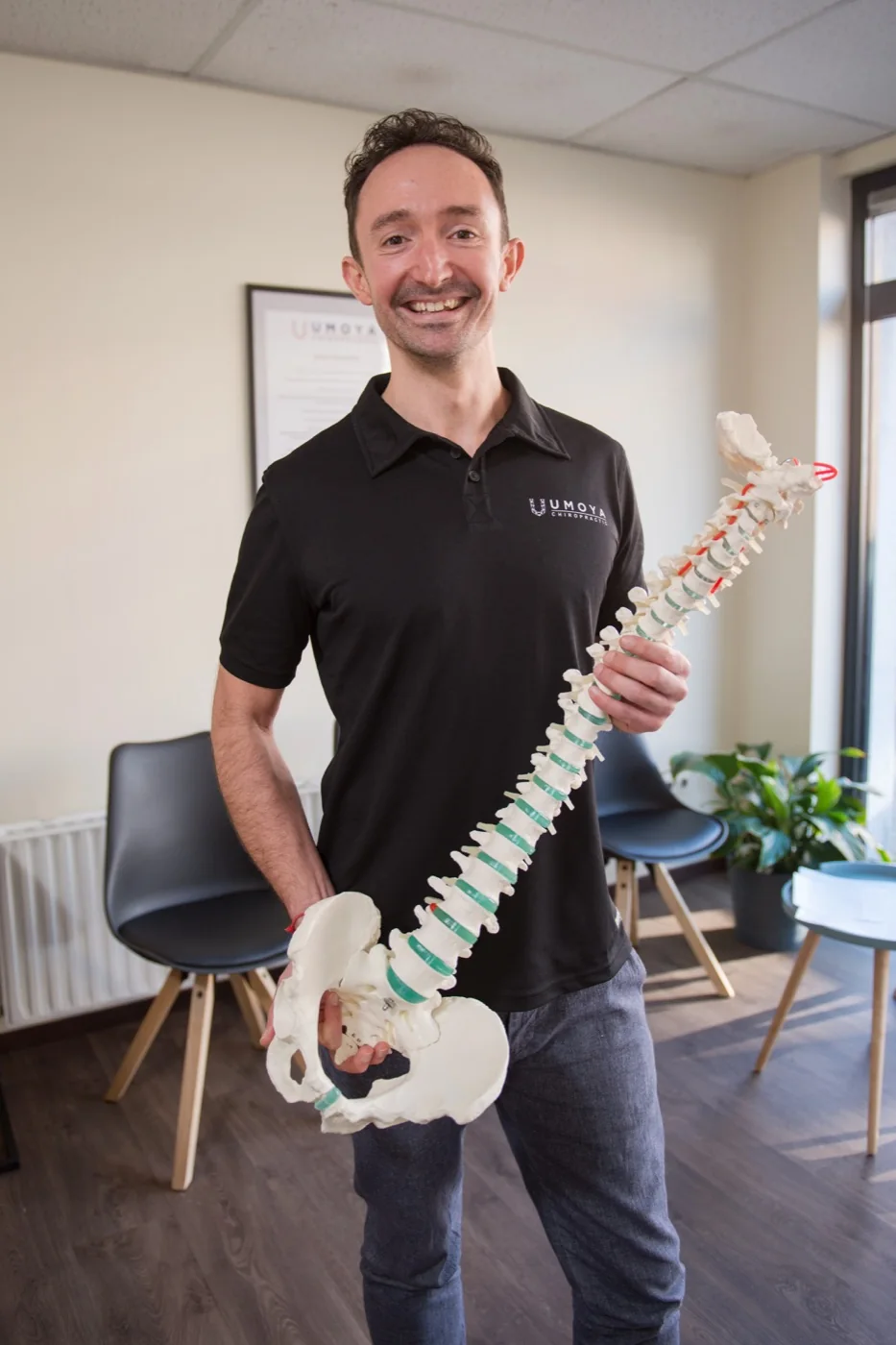
How we approach headaches at UMOYA
We begin by listening carefully to your experience.
When do your headaches occur? How long do they last? Have their characteristics changed? What other symptoms accompany them, and how do they affect your daily life?
Our neuro-functional analysis helps us examine relevant aspects of movement, physical function and how your body responds as a whole.
Alongside your symptom history, we consider full-spine functional movement, neurological function, posture and other clinically relevant findings.
These observations contribute to a broader assessment that also considers whether further medical evaluation is indicated.
The purpose is not to assume that a headache necessarily represents a spinal problem. It’s to develop sufficient understanding to determine what the appropriate next step might be.
Your symptoms deserve to be taken seriously. But meaningful recommendations require more than identifying where you feel pain.
What role can chiropractic care play?
Chiropractic care may have a role in the management of some headache presentations, particularly when relevant musculoskeletal factors are identified.
That does not mean every headache is suitable for chiropractic care, or that changes in spinal function necessarily explain headache symptoms.
When appropriate, recommendations may include chiropractic care alongside advice about movement, physical activity and other relevant aspects of everyday function.
Our broader objective is to support your ability to function and adapt to the demands of daily life, rather than simply trying to avoid or modify those demands.
We discuss our findings and the available options, including their limitations, so that you can make an informed decision about your care.
When headaches need medical attention
Some headache symptoms require urgent medical assessment.
A sudden, extremely severe headache that reaches maximum intensity within seconds or minutes, particularly if it’s unlike previous headaches, requires emergency evaluation.
Headaches accompanied by new weakness, difficulty speaking, confusion, loss of consciousness, significant visual changes, fever with neck stiffness or other concerning neurological symptoms may also indicate a serious medical problem requiring immediate attention.
A new or progressively worsening headache, a substantial change in a familiar headache pattern, or headaches associated with particular medical conditions may warrant further medical investigation.
When your presentation suggests that another healthcare professional or another form of care would be more appropriate, we’ll discuss that with you.
Let’s start with a conversation
Whether headaches are an occasional interruption or a recurring concern, you don’t need to know their cause before getting in touch.
Our complimentary consultation gives you approximately 20 minutes to discuss your experience, ask questions and learn more about our approach.
There’s no examination, treatment or obligation during this conversation.
Understanding your situation comes first. Appropriate recommendations follow from there.